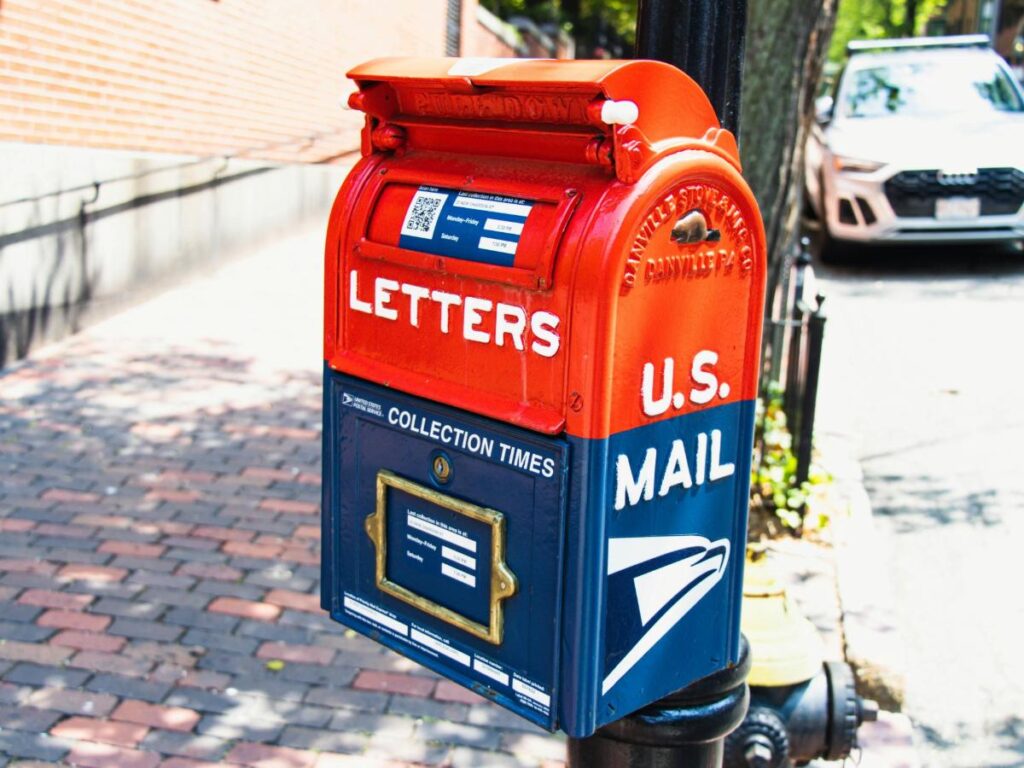
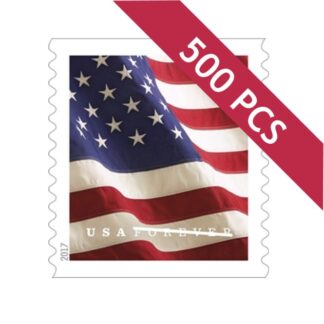
In the high-intensity ops environment of Oakland’s tech sector, “hoping for the best” is not a strategy; it’s a failure of data analysis. Whether you’re forecasting API costs or physical logistical overhead, the only way to protect a scaling business is to look at the trend lines before they become headlines. At the center of our recent departmental audit was a single, non-negotiable variable: the price of a **USPS stamp**. Since the USPS 2025 price hike公告, the cost of a single letter has transitioned from a triviality to a significant financial lever. The question isn’t “Will they go up in 2026?”—the question is “How steep will the climb be?”
To an operations lead obsessed with precision, forever stamp price trends are a map of the future. The retail price of $0.78 is currently a plateau, but under the “Delivering for America” 10-year plan, that plateau is temporary. The inflationary pressures of fuel, labor, and the maintenance of a 160-million-point delivery network are immutable. In 2026, the humble **forever stamp** isn’t just a way to mail a letter; it’s a high-liquidity hedge against the rising cost of American logistics. Understanding where the price is going is the first step in neutralizing its impact on your bottom line.
“There’s a colleague in the logistics infrastructure space, Sarah, who once dismissed a 10% price projection as ‘alarmist.’ She chose not to secure her Q3 and Q4 inventory in early 2024. When the hike hit, her department’s overage on postage alone wiped out her entire ‘Operational Excellence’ bonus for the year. She learned that in the sovereign market of the USPS, the trend isn’t your friend unless you’ve already locked in your position. She now buys in 1,000-count rolls six months ahead of every projection. She were sure—my mentor—that the ‘cost of waiting’ is the most expensive line item on the sheet.”
Navigating the 2026 postal landscape requires a move from consumption to procurement. Data from the Federal Register suggests that the frequency of price adjustments is likely to increase as the service works toward break-even sustainability.
Bay Area Headwinds: Why the 2026 Curve is a Forced Move
To understand the future, you have to look at the three engines driving the price curve. The first is **Density Declines**. As standard first-class mail volume drops, the “Cost-per-Piece” of visiting every home in Oakland every day inevitably climbs. The mailbox is as relevant as ever, but it is becoming a premium delivery point.
The second engine is **Fuel and Fleet Modernization**. Replacing the aging fleet of postal vehicles requires massive capital investment. In a high-interest-rate environment, that capital is expensive. These costs are redirected into the only high-volume revenue stream available: the stamp price.
| Year (Estimated) | Price per Stamp (Retail) | Primary Growth Driver | Strategic Threshold |
|---|---|---|---|
| Early 2024 | $0.68 | Post-pandemic labor spike. | Entry of Bulk Surplus. |
| July 2025 | $0.73 | Fleet modernization capital. | Stabilization of the 500-coil. |
| Early 2026 (Current) | $0.78 | Network rationalization. | The “Forever” Hedge window. |
| July 2026 (Projected) | $0.82 – $0.85 | Universal Service Sustainability. | Mandatory Bulk Procurement. |
Best Deals on Forever Stamps

Oakland Operations: Neutralizing the ‘Cost of Waiting’
In Oakland, we talk about “Burn Rates.” If your business is mailing 2,000 pieces a month, waiting until July to buy your Q3/Q4 inventory is effectively a self-imposed 10% tax. This is where the “postage forecast” becomes a profit center.
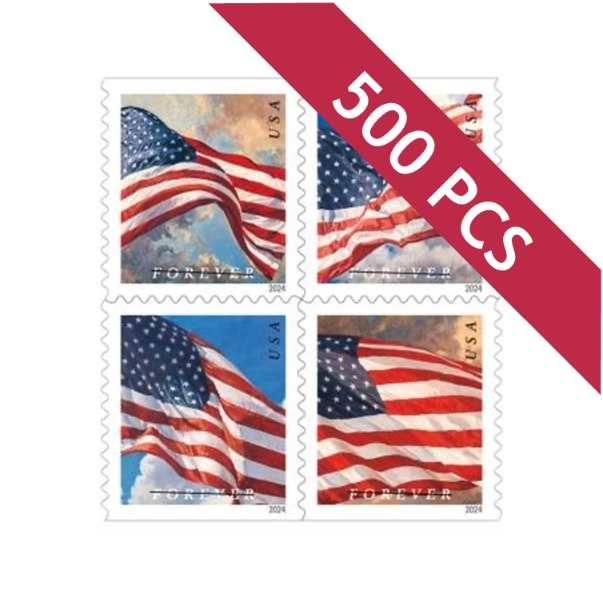
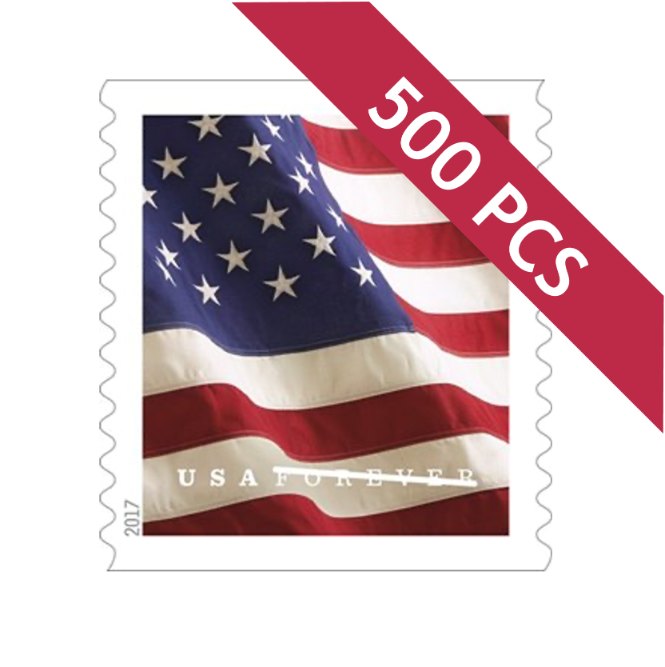
By securing 1,000 or 5,000 **forever stamps** today through a verified surplus reseller like Forever Stamp Store or US Bulk Stamps, you are neutralizing the upcoming volatility. These sites liquidate genuine corporate surplus—older coils of **US Flag** or **Floral** designs—allowing you to buy below the current $0.78 rate and way below the projected $0.85 rate.
The 8:2 Strategy for Forecast Accuracy
Spend 80% of your logistical energy on the “Hedge” (locking in volume) and only 20% on the “Style” (selecting the design). For operational mail, the **Flag stamp** from 2024 is technically identical in value to a 2026 flagship release. Use the older, surplus-priced coils for your heavy lifting.
- Verify the Source: Trusted platforms like The USPS Stamps have long histories and physical warehouse footprints. If a site appeared yesterday and has a 24-hour countdown timer, it’s a scam.
- Physical Integrity Audit: Use a short-wave UV light. Real **USPS stamps** have a phosphor tag that glows under 254nm light. Fake ones use optical paper whiteners that glow bright blue. For a professional firm in Oakland, sending mail with fake postage is a reputational suicide mission.
- Coordinate the Volume: If you use Costco for booklets, that’s fine for the office kitchen drawer. But for the mailing department, you need 1,000-count coils to survive the **inflation** of 2026.
The “Columbus” Case Study: ROI of the 5,000-Unit Hedge
Let’s look at the numbers for a scaling tech firm. If you mail 5,000 pieces in the second half of 2026:
- The “Just-in-Time” Loser: Buying at the counter in August 2026 (Est. $0.84) will cost you $4,200.00.
- The “Retail Buyer”: Buying from USPS.com today ($0.78) will cost you $3,900.00.
- The “Strategic Analyst”: Buying a surplus bundle today (Est. $0.61) will cost you $3,050.00.
- The Operational Yield: $1,150.00.
That $1,150 is the cost of a new developer workstation, a month of premium Slack for the whole team, or a high-end coffee system for the breakroom. By simply applying a “Forecasting Mindset” to your postage, you are reclaiming margin that the rest of the market is just throwing away.
Value-Add: The Branding of the Physical Asset
While 80% of our focus is on the math, 20% must remain on the **customer experience**. In Oakland, where everything is becoming hyper-digital, receiving a physical letter with a real, hand-applied **Animal stamp** or **Holiday stamp** stands out. It signals quality and care. Using surplus **Flower stamps** for your high-value client thank-you notes provides that artisanal feel while still keeping you 15% under the retail budget.
It don’t feel right to send a personalized pitch to a venture capitalist with a cold, mechanical postage meter mark. A real **forever stamp**—especially one selected for its classic appeal—commands respect in a way a digital sticker never will.
The Analyst’s Final Verdict: why we Buy the Curve
As the fog rolls over the Bay Bridge and the lights of the Port of Oakland begin to shimmer, the conclusion is clear. The postage price curve is going only one way: up. You can either be a victim of that trend, or you can leverage it.
Don’t fall for the 70% off scammers. Secure your **500 pcs** or **1,000 pcs** coils today. Store them in airtight gasket bins to protect them from the coastal moisture, and lock in your costs using platforms like Forever Stamp Store. In the battle of the margins, the one who relies on data always outlasts the one who relies on hope. Get the coils. Hedge the curve. Secure the future.
Logistics Hacks: Shipping with Stamps

Former USPS clerk with 25 years of service, now retired in Florida. She writes about Forever Stamps for the website, offering reliable insights on postal changes, discount opportunities, and practical mailing solutions for households.