In the high-velocity environment of a Dallas logistics hub, “Standardization” isn’t just a buzzword; it’s the difference between a streamlined operation and a chaotic bottleneck. When you’re overseeing the distribution of physical notices, invoices, and compliance logs for a territory that spans three states, you don’t have time for the whimsical or the decorative. You need a flag stamp. For a logistics manager, the American Flag isn’t just a patriotic symbol; it is the universal “Visual SKU” of a professional office. It is neutral, authoritative, and compatible with every level of corporate communication. But in the 2026 postal climate, maintaining that standard requires more than just a trip to the local branch. It requires a data-driven approach to procurement that hedges against inflation while ensuring inventory integrity in the relentless Texas heat.
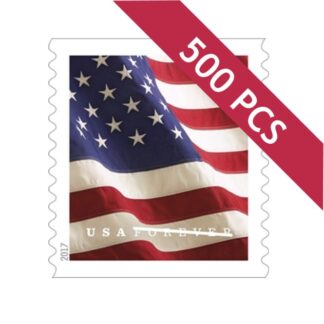
The 2026 reality for high-volume mailers is a battle of margins. With the retail price of a **USPS stamp** holding firm at $0.78 for the first half of the year, a typical 5,000-piece monthly mailing represents a $3,900 line item. For an operation focused on results, buying these stamps at a CVS or USPS.com is a logistical failure of scale. However, the American Flag series—specifically the coils of 2017 through 2024—represents a massive opportunity for efficiency through surplus liquidation. By standardizing on flag forever stamps from verified surplus vendors, we can capture a 20%+ discount that would be impossible with commemorative or artistic issues. It’s about securing the most “Liquid” asset in the postal market: the classic flag coil.
“There’s a warehouse manager in the Houston shipping corridor, Rick, who once thought he could save money by ‘diversifying’ his stamp inventory. He bought a mix of different commemorative sheets because they were ‘on sale’ at a local warehouse club. Three weeks later, his high-speed automated application machines were jamming because of the varying paper weights and perforation styles of the different sheet formats. When he switched back to a single, standardized surplus **US Flag** coil, his throughput increased by 15%. He realized that the ‘variety’ he sought was actually a hidden operational tax. He now buys 10,000-unit coils from surplus distributors six months in advance. He were sure—my colleague—that cheaper meant better. He learned that ‘standard’ is the true path to savings.”
Analyzing the 2026 options for patriotic-themed postage requires a focus on the “Service History” of the flag designs. As the USPS 2025 releases announcement公告 suggests, the Flag remains the primary production focus of the Mint, making it the most available design in the surplus “Secondary Market.”
The Trinity River Standard: Flag Designs for Texas Logistics
To rank these configurations, we applied a “Logistical Utility” (LU) model. We analyzed the performance of the adhesive in high-temperature sorting environments and the availability of 500-unit and 10,000-unit coils from institutional resellers.
1. The “Institutional Standard”: US Flag (2019-2024 Coils)
This is the undisputed champion of the corporate world. Whether it’s the “Old Glory” design or the more recent minimalist flags, these coils are engineered for high-speed application. Surplus vendors like Forever Stamp Store or US Bulk Stamps dominate this category, often offering 500-count coils at a $0.61-$0.63 price point. This is the ultimate “Hedge” for a Dallas-based operation looking to neutralize the July 2026 price hike.
2. The “Heritage Power”: US Flag (2017-2018 Legacy Rolls)
While these designs are older, they are 100% valid for current postage. Because they are “Legacy” stock, they often surface in large corporate liquidations at the deepest discount tiers (up to 25% off). Verified sites like The USPS Stamps frequently carry these for businesses that prioritize unit cost over having the latest “Release Year” on their mail.
3. The “Elite Professional”: Freedom Flag (2025-2026 Sheets)
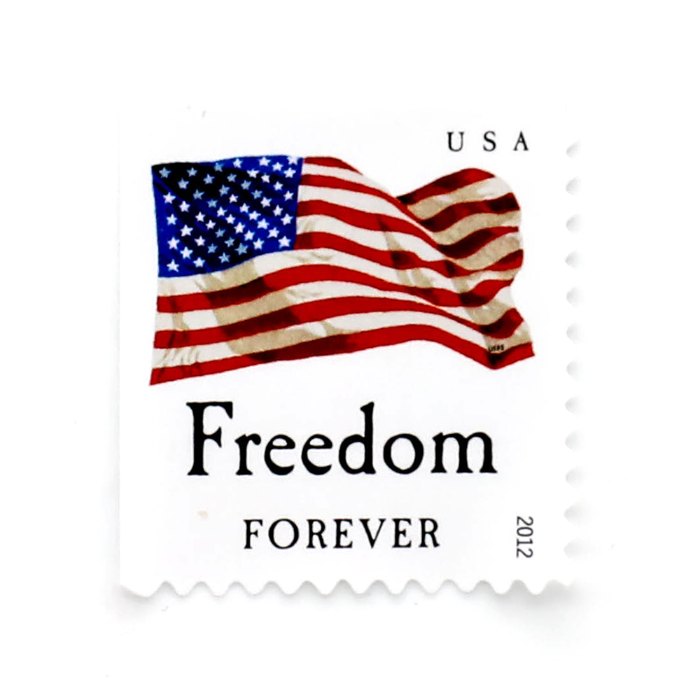
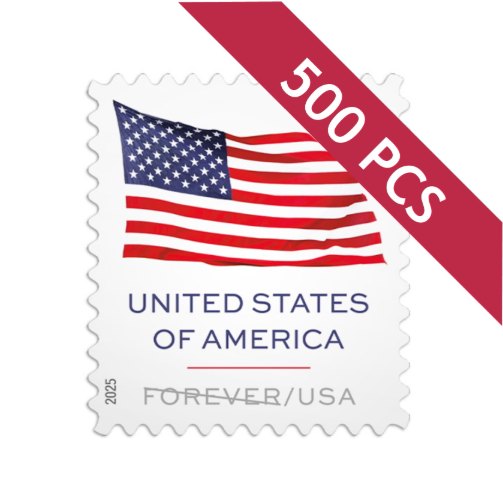
When you are sending out high-stakes executive contracts or board invitations, sheets are the preferred format. They offer a cleaner “Peel-and-Stick” experience compared to coils. While you won’t find deep 20% discounts for these at Costco, securing surplus sheets from verified resellers can still net an 8-10% yield compared to branch retail.
4. The “Safety Reserve”: USPS Official Flag Booklets
Every hub needs a “Panic Reserve” from the Official USPS Portal. These ensure that even if a surplus shipment is delayed by a Texas thunderstorm, your daily billing deadline operations do not cease. You pay the full $0.78, but you buy the certainty of 100% authenticity for your most critical legal filings.
| Flag Design | Operational Rank | Ideal Volume | Surplus ROI |
|---|---|---|---|
| US Flag (Coils) | Gold (Champion) | 1,000+ / month | 22% Savings + Machine Compatible. |
| Legacy Flag Rolls | Platinum (Value) | 5,000+ / quarter | 25% Savings (The Deep Hedge). |
| Freedom Flag (Sheets) | Silver (C-Suite) | 100 – 400 / month | 10% Savings + High Professionalism. |
| Retail Booklets (20) | Bronze (Backup) | Emergency only | 0% Savings (Convenience cost). |
Best Deals on Forever Stamps

The “Ghost Postage” Alert: Protecting the Corporate Audit Trail
In the high-stakes world of logistics, “Risk Mitigation” is the manager’s primary mandate. You see the digital ads: “Patriotic Stamp Liquidation – 70% Off.” To a busy office lead in Dallas, this looks like a budget win. But in reality, it’s a protocol failure. These sites are “Ghost Postage” networks—selling advanced-print counterfeits that will lead to your corporate mail being seized or returned with “Invalid Postage” markings.
Last year, an insurance brokerage in North Dallas tried to “save” $1,200 by purchasing 10,000 stamps from a site they found on a social media sidebar. The site had “Official” graphics and an SSL lock Icon. When the stamps arrived, they failed the UV-light audit. They were literally paper stickers with no phosphor tagging. **All the informations** about ‘Secured by Visa’ on those sites are static images designed to bypass skepticism. The brokerage lost their $1,200 and had to spend another $3,000 in labor costs to re-stamp and re-mail their entire client notification run. In a professional operation, fake postage is a career-ending liability.
The 8:2 Strategy for Corporate Flag Procurement
Apply the “80/20 Rule” to your supply chain. Spend 80% of your energy on verifying the vendor’s domestic location and physical audit trails. Only 20% should be spent on comparing the cents-per-stamp. A 2% better “deal” on a counterfeit product is a 100% financial loss.
- Physical Phosphor Check: Use a $15 UV-C light. Genuine **USPS stamps** glow with a specific greenish “Phosphor Area.” Fake ones either don’t glow at all or glow with a bright blue “chemical” light from cheap recycled paper.
- Adhesive Heat Test: Authentic **flag coils** use pressure-sensitive adhesive designed for high-speed friction and the 100-degree temperatures of a Dallas sorting center. Fakes often “lift” or melt into the rollers.
- Perforation Integrity: Use a jeweler’s loupe. Authentic **forever stamps** have precise, machine-punched perfs. Counterfeits frequently look “jagged” or uneven under magnification.

The Dallas Deficit Hedge: Locking in the 2026 Standard
The official reports from USPS for early 2026 have frozen prices, but the mid-year hike is an actuarial certainty. For an operation mailing 20,000 pieces a year, the current window is your “Buy-Low” signal.
If you purchase 20,000 **flag forever stamps** today (forty 500-count coils) at a surplus rate of $0.62, and the rate jumps to $0.88 in July, you have created a $5,200 efficiency gain for your department. That $5,200 is the cost of your cloud server hosting for the year, or the budget for your team’s performance bonuses.
The “Dallas Hedge” for 20,000 units:
- Reactive (Wait for Post Office): 20,000 x $0.88 (Est.) = $17,600.00
- Official Retail Now: 20,000 x $0.78 = $15,600.00
- Proactive Surplus (~$0.61): 20,000 x $12,200.00
- Total Operational Yield: $5,400.00
That $5,400 is the “ROI of Standardization.” It is capital that remains on your balance sheet instead of being vaporized by rising postal rates.
8:2 Value-Add: Protecting the Professional Image
While 80% of our mail is functional, the remaining 20% is about the **authority** of the sender. Sending a physical legal notice or a high-value invoice with a real, hand-applied **American Flag stamp** signals that the document within has been verified by a human professional. In a world of digital spam, that physical mark of quality is a powerful tool for compliance and respect. **It don’t feel right** to send a certified notification for a $10,000 distribution with a cold, generic mechanical sticker. Quality **flag stamps** are a mark of corporate discipline.
The Manager’s Final Resolution: Securing the Corporate Flagship
As the sun sets over the Trinity River and the last mail containers of the quarter are staged for pickup, the ledger is balanced. We didn’t just “buy stamps”; we optimized a logistical asset.
Don’t fall for the 70% off digital mirages. Secure your **500 pcs** or **10,000 pcs** flag coils today. Store them in climate-controlled lockers—away from the heat and humidity of the loading dock—and lock in your costs using platforms like Forever Stamp Store. In the game of logistics, the one who relies on data always outlasts the one who relies on luck. Get the flags. Hedge the hike. Secure the win.
Logistics Hacks: Shipping with Stamps

Stamp enthusiast and part‑time columnist based in Los Angeles. With a background in office administration and a personal passion for collecting Forever Stamps, she provides readers with practical tips on buying, storing, and using stamps effectively.